
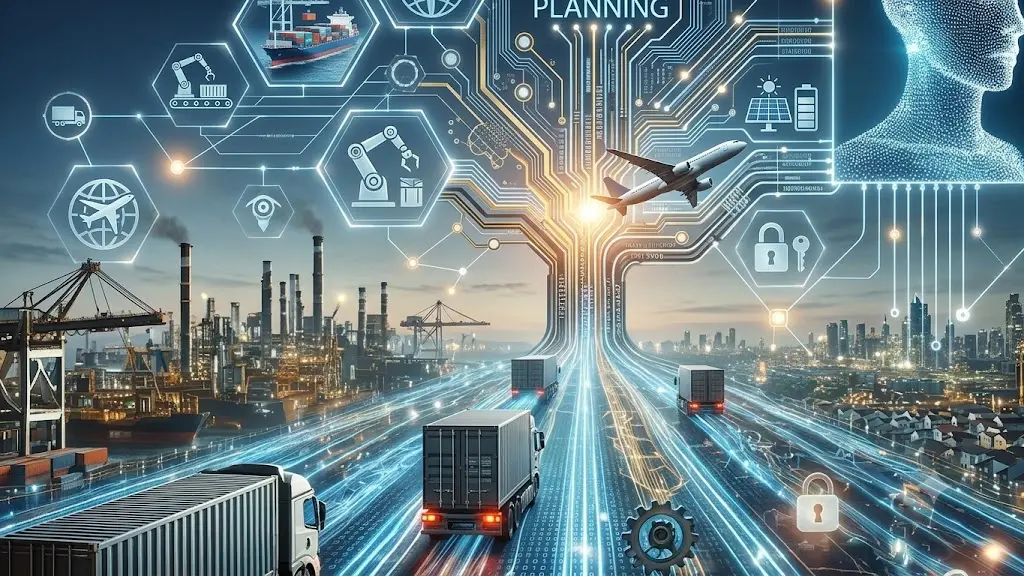
AI in supply chain operations is changing how fast businesses catch a stockout — within hours a single miss can cost thousands of dollars in lost sales for a retailer, but most supply chains still respond to issues instead of anticipating them.
With AI in supply chain operations now in play, there’s no longer any element of guesswork — it’s all about accurate forecasts and automatic decision-making. According to Gartner, 75% of big companies are already using analytics based on AI for their supply chain management systems, compared to 30% in 2020. In this guide, we explain what AI means in the supply chain context, what predictive analytics are capable of predicting demand, and what automation can do to eliminate disruptions, using case studies from Aidukes.
What Is AI in Supply Chain Management?
AI in supply chain management entails the use of artificial intelligence in managing, monitoring, and optimizing the movement of goods from supplier to consumer. Instead of rigid spreadsheets and averages, these systems react to live data and detect trends beyond what human planners can notice.
As reported by Deloitte in a recent supply chain survey, 62% of respondents said their primary focus was using AI for inventory management, and early adopters were making decisions 35% faster than those still working manually.
Why AI in Supply Chain Digital Transformation Matters Now
The road to supply chain digital transformation has become a must rather than an alternative, made evident by the global disruptions of the past year and the fragility of the old reactive approach. Companies still using traditional systems are competing against rivals who can reroute shipments, revise inventory, and flag risks within minutes rather than days.
According to Accenture, AI-based supply chains outperform spreadsheet-run supply chains in profit by 23%.
Key Technologies Behind AI-Driven Supply Chains
Four pillars of technology drive most of today’s AI-powered supply chain.
Machine Learning predictive models leverage historical and real-time data to predict demand and identify anomalies before they become problems that cost a lot of money.
Computer Vision takes care of quality control of products and keeps the warehouse safe even without humans examining each rack of goods.
Natural Language Processing tools extract intelligence from emails and supplier agreements as well as consumer data.
Robotics handles all picking, packaging, and sorting processes way faster than any group of human employees.
Predictive Analytics in Supply Chain
The application of predictive analytics in supply chain planning allows converting raw data into actionable insights before any problem happens on the warehouse floor. The problem is not that the problem occurred – but that managers know about it weeks ahead.
How Predictive Analytics Forecasts Demand
Predictive analytics uses sales data, weather information, social media activity and economic indicators in order to forecast what will be bought, when and where.
It’s an always-updated and live model – not just the outdated forecast that everything next month will be just the same as last month.
Reducing Disruptions with Predictive Risk Models
Predictive risk models track these variables continuously and flag likely disruptions before they become delivery failures. If a port closes or a supplier falls behind, planners get an early warning instead of a panic — enough time to line up an alternate route or backup supplier.
Real-World Example
According to the McKinsey & Co. study on AI in distribution operations, businesses that integrated predictive analytics into daily operations reduced inventory expenses by 20–30% and logistics expenses by 5–20%. One mid-sized retailer cut emergency-shipment freight spend by almost half in a single fiscal year, simply by catching demand shifts three weeks earlier than its old forecasting system did.
AI in Supply Chain Inventory Management
AI-assisted inventory management resolves the conflict between two conflicting fears: under-delivery of products to the clients, and overfilling the shelves.
Automated inventory systems analyze sales speed, seasonality changes, and delivery times of suppliers, and set order points automatically.
Automated Stock Replenishment
Automatic systems create purchase orders automatically when the inventory level reaches certain point taking into account lead times, sales patterns, and promotions, and thus removing the lag between detecting low inventories and placing orders, which could have resulted in sales loss for the companies in high seasons.
Reducing Overstock and Stockouts with AI in Supply Chain
Excess inventory ties up cash and space; stockouts hand customers to competitors. AI models manage this risk by continuously recalculating optimal stock levels per SKU and location, instead of applying one reorder rule company-wide. Per McKinsey’s research, this can cut inventory carrying costs by up to 30%.
AI-Based Tools For The Warehouse
AI-based slotting solutions, AMR systems, and computer vision for quality control are used together in the warehouse setting. Slotting tools determine the best location for products to provide efficient picking routes, whereas robots do the monotonous transportation tasks once performed by employees.
Advantages Of AI In Supply Chain
Cost savings is one of the advantages of AI implementation in supply chain management – but there are many others, and in most cases, cost savings are sufficient motivation for investing in AI technology.
- Cost reduction: AI planning reduces inventory, logistics, and procurement costs at once, by double digits.
- Faster decision making: AI-enabled groups make decisions 35% quicker thanmanual groups.
- Visibility: Real-time dashboards allow avoiding weekly or monthly reports.
- Sustainability benefits: Efficient routing and accurate demand forecasting result in reducing unnecessary emissions.
Challenges of Adopting AI in Supply Chain
Adapting AI into supply chain management processes is certainly not an easy plug-and-play process and inadequate preparation means low efficiency.
- Poor data quality: The whole idea behind the AI models is based on the use of data – inaccurate data leads to inaccurate forecasts.
- High integration expenses: AI solutions should be connected to existing legacy warehouse and ERP systems.
- Change Management: The best model won’t be successful unless the team gets proper training and is committed.
How to Get Started with AI in Your Supply Chain
Implement AI in supply chain activities in phases and not immediately. Begin with processes that are highly impacted by manual estimation – demand forecasting, replenishment and route planning. Pilot test AI tools in one product category or warehouse. If successful, implement in other departments and improve the model with each implementation.
Future of AI in Supply Chain
- Applications of Generative AI: Generative models will be used to develop supplier agreements, generate risk analysis reports and predict disruptions before they occur.
- Self-coordinating fleets and warehouses: The future logistics network will become increasingly self-managed and transport goods without any human intervention and reduce response time from days to minutes.
Conclusion
AI technologies used in SCM have made huge progress, and today it serves as a genuine advantage to those companies that utilize its power from the very beginning. Whether it is demand forecast prediction or automated inventory control, everything can be accomplished much faster thanks to AI. Businesses that scale a proven pilot — rather than waiting on the sidelines — will consistently outperform those that start small. Aidukes will keep monitoring these shifts and helping supply chain teams turn hype into measurable, actionable outcomes.
FAQs
What is the purpose of AI in supply chain management?
Artificial Intelligence for supply chain management uses current and past data to predict future demand, plan inventory and risk, as opposed to having humans react to the situations.
How does the use of predictive analysis help optimize the supply chain?
Using predictive analysis helps companies be aware of demand patterns and possible disruptions prior to their occurrence, thus being able to act on the matter and avoid unexpected costs associated with rush shipping or shortage of stock.
Are there inventory management solutions based on AI technologies that can be used by small businesses?
Certainly, because now more and more vendors provide flexible subscription plans. Even just a simple automatic order system can help minimize unnecessary stock and missed sales opportunities.
How long will it take to see results after implementation of AI in supply chain management?
Within the first three to six months of a proper test run. More noticeable results, like double-digit savings, are seen within one year after implementation.
Is it possible to apply AI in supply chain management without a big budget?
No — most vendors offer modules that require little upfront investment while still delivering measurable results.
 Facebook
 Twitter
 Instagram
 Pinterest




Leave a Reply