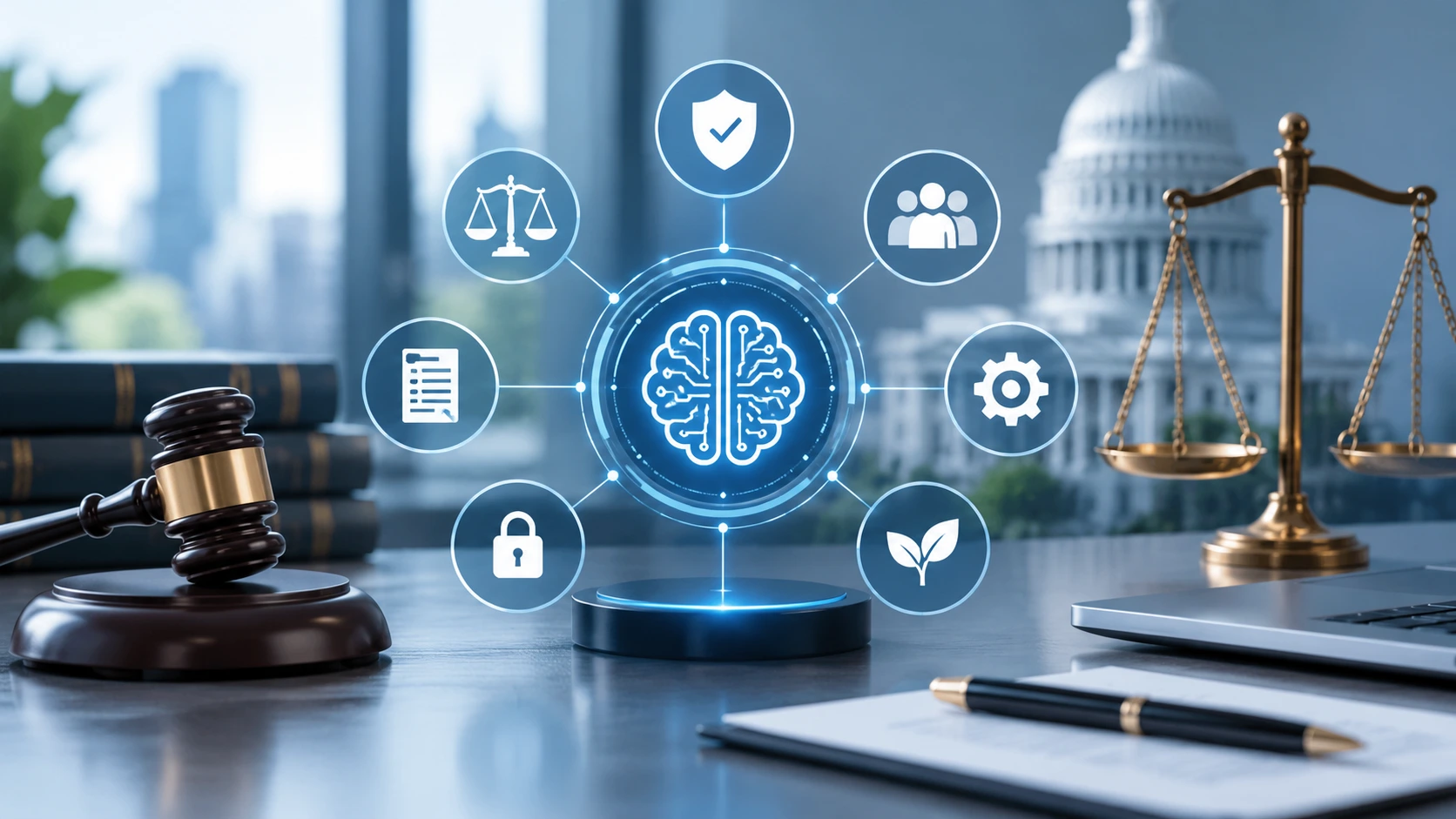
Organizations are using AI too quickly and at a rate that can’t be controlled. That velocity becomes a liability if AI governance is lacking as it may lead to legal liability, biased results and loss of stakeholders’ trust. Changes in the regulatory landscape, customer expectations and board demands are now calling for answers that few companies are prepared to provide.
Where once executives were satisfied with quick experimentation with artificial intelligence, they are now asking themselves the question of who will take responsibility if the model fails. It is this change that’s making structured oversight more important than the speed of adoption.
What is AI Governance?
AI governance is the set of policies, processes and frameworks that can be applied to the responsible management, monitoring and control of AI systems. It sets ownership of AI decision-making, risk flagging and what to do if something goes wrong.
So what is AI governance in practice? It’s the link between good will and effective regulations. It’s similar to the broader topic which involves risk management, compliance and organizational management for all AI programs a company deploys.
Artificial intelligence governance is unique from standard IT governance, as AI systems have the ability to learn, adapt and sometimes act unexpectedly. A static policy document isn’t sufficient; governance requires continuous monitoring, not just a sign-off.
Top Benefits of AI Governance
By adopting strong AI governance, risk management becomes not just a compliance requirement but a competitive edge.
- Less legal or regulatory risk — proactive compliance is compliance without the surprises.
- Greater trust from stakeholders — clear and explainable AI decisions bring trust to customers and investors and regulators.
- More effective decision-making — all teams operate off the same playbook with consistent AI governance.
- Reduced bias and error — effective and organized monitoring prevents issues in production.
AI Ethics and Governance: Why They Go Hand in Hand

Ethics and governance address two sides of the same issue. Ethics – What is right? Governance – Enforces what is right with systems.
Fairness, accountability and transparency are good policy principles in themselves but they are rendered mostly powerless as such without policy “teeth.” The principles of AI ethics and governance are inseparable, since principles show the way while governance ensures that it is followed.
Avoid this combination and the repercussions make themselves apparent quickly. Each of these scenarios has its roots in a gap in AI ethics and that gap is not a recent phenomenon.
Common AI Governance Frameworks and Models
Very few businesses start with a blank sheet when developing AI governance models. Instead, they often build on established frameworks and standards, such as the NIST AI Risk Management Framework, ISO/IEC 42001 or the EU AI Act’s risk-tiering approach.
In determining which governance structure is right for your company, you have to consider both centralized and decentralized models. For instance, you may set up a centralized ethics committee or decentralize AI by assigning ownership to various units of your company. What is important is the structure that suits your company’s decision-making and responsibility assignment processes.
AI Governance Standards and Oversight in Practice
Standards provide a standard for teams. AI governance oversight bodies ensure that those standards are not merely written down but are applied.
Day to day governance enforcement is achieved by means of internal review committees, model risk teams and independent auditors who catch drift before it’s in the headlines. Adopted AI governance standards are growing more uniform around the world, making it easier to follow the standards across borders rather than creating them from scratch.
Key AI Governance Challenges Businesses Face

Addressing these issues is not about resolving all problems at once. Begin by starting with the riskiest AI application in your organization, use a simple framework and evolve from there. For a closer look at how global regulations are evolving, see Aidukes’ guide on AI safety regulation.
The same problems with AI governance challenges occur even in well-funded programs as in-house experts are scarce, regulations change every few months and compliance varies across countries.
Identify the application that is the most vulnerable and apply a simple model with increasing levels of monitoring. To learn more about the current regulatory landscape and how it is developing around the world, read Aidukes’ guide to AI safety regulation. As AI safety regulation continues to evolve, staying informed will help businesses adapt quickly and avoid compliance gaps.
FAQs
What exactly is AI governance?
AI governance is the rules and watchdog that make sure AI remains accountable. It outlines the process of approval, monitoring and accountability for AI models.
What are the key governance issues that businesses are facing with AI?
There is a lack of AI risk expertise in the business and regulations are constantly evolving. AI implementation across borders comes with issues to be considered due to the fact that organizations cannot turn a blind eye to multiple sets of regulations.
How does AI governance differ from AI ethics?
Examples of ethical standards for AI include fairness, accountability and transparency among others. AI governance is all about putting these ethical standards into practice.
Who will be responsible for AI governance in the organization?
A multidisciplinary team will be involved in governing AI, which includes legal, compliance, IT security and data science. An AI governance lead or committee often together with executive support may coordinate the program.
Should small businesses also have an AI governance program?
Yes. Just one AI tool can present dangers when managing customer data or making business choices. It’s possible for small businesses to begin by having a lightweight policy that addresses approval, monitoring and accountability.
 Facebook
 Twitter
 Instagram
 Pinterest




Leave a Reply