If you’ve ever asked what is generative ai and gotten a confusing answer, you’re not alone — ask 10 people and you’ll likely get 10 different answers. Some call it a chatbot, others call it an image generator. In reality, it’s a form of AI that can create new content as opposed to merely analysing data.
After just two months of launch, ChatGPT became the world’s fastest-growing consumer app of all time, reaching 100 million users — and that growth has continued since. Aidukes explains what it is, how it works, how it’s used in real life, and the dangers to watch out for, so you end up with a true understanding of the technology changing the world.
What Is Generative AI?
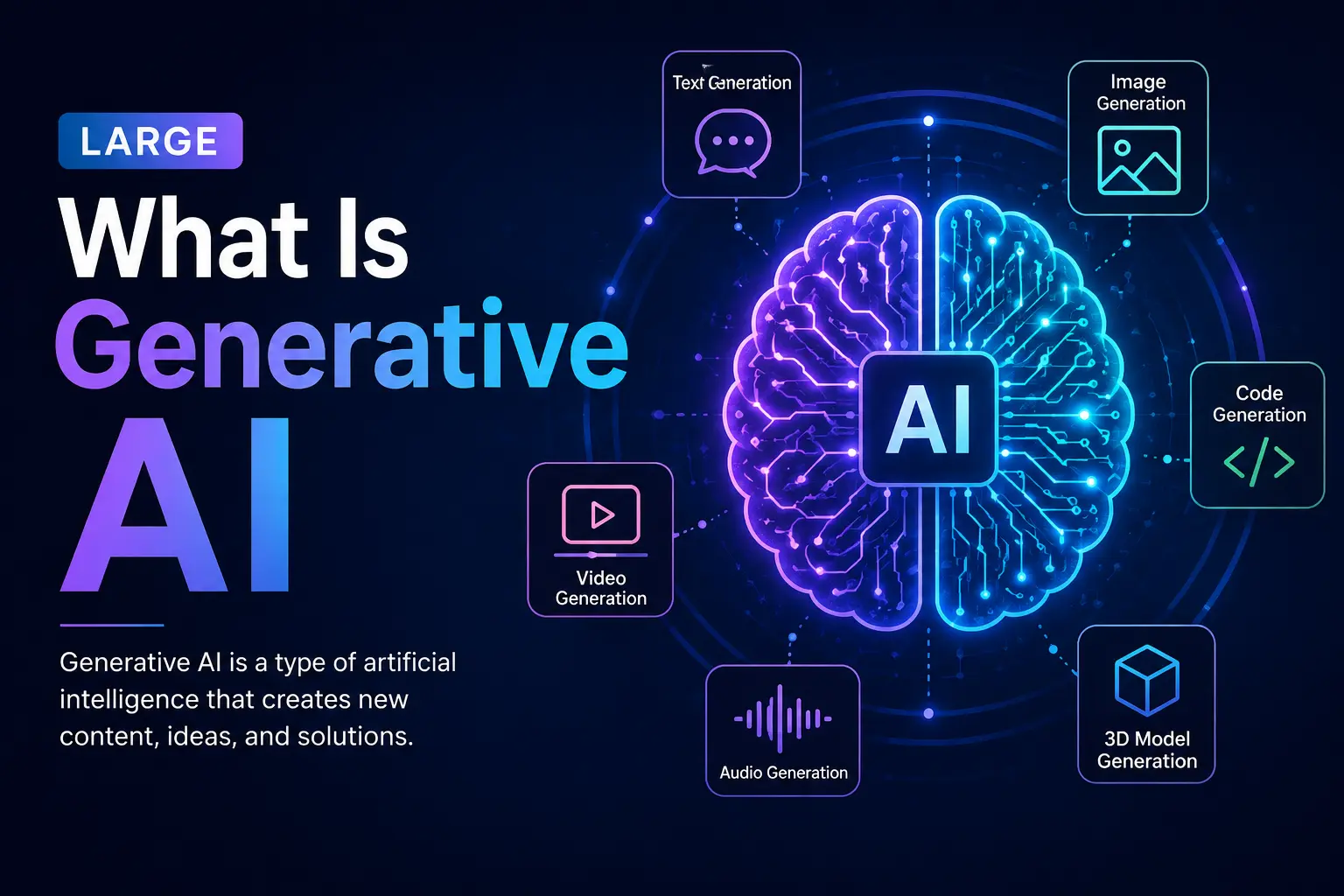
Generative AI is a type of AI that generates new text, images, audio, video and even code from existing data as opposed to categorizing and predicting from set options. However, rather than simply identifying a cat from a picture, generative AI can produce an image of a cat that doesn’t actually exist. It’s important today because, as McKinsey’s 2025 worldwide survey of nearly 2,000 companies found, about 79% of business AI applications are powered by generative AI.
Each of the traditional AI models, such as classification, prediction and recommendation, is a classification-based model. Generative AI takes it a step further, by creating something new every time you ask it to. Question once again and it is likely you will get two different and equally valid answers as the model produces answers rather than it retrieves.
Generative AI Meaning
To answer what is generative ai at its core, the meaning becomes clear once you dissect the word itself. The word “generative” derives from the verb “to generate”, which means to produce, or create. The basic idea of the technology is learning the patterns from a large collection of data and then creating new content based on those learned patterns with similar rules, structures and styles.
Its name “generative” means that it is not simply copying what it has learned; This is why it is called “generative” because it does not simply copy what it has learned; It is capable of ‘re-generating’ patterns in new combinations, which is why the same prompt might generate dozens of different outputs instead of one set and why some of the outputs are very similar to each other but not exactly the same.
Generative AI Definition
Technical Generative AI Definition: Any machine learning system trained on a large dataset to capture statistical regularities in language, pictures or sound, used to produce new text, images or sounds that are statistically similar to the information it was trained on.
Whether you’re asking what is generative ai from a beginner’s view or a technical one, in simple terms for novices, generative AI is software that generates content such as text, images, music, code and more predicting what comes next from a vast mass of data it was trained on. It has three qualities: generates original content, learns from large training sets and answers plain language prompts.
How Does Generative AI Work?
The first step to understanding the inner workings of generative AI is its training. Models can examine huge amounts of data, learn patterns then make new content by forecasting what should be the next word, image, sound in a pattern based on all the data it has seen during training. See how these models are already boosting output in our guide to AI productivity tools.
Machine Learning and Deep Learning
Generative AI is built on deep learning, a part of the machine learning framework, which is used by several layers of neural networks that can identify more complex patterns. The layers become more abstract from one to the next; from shapes, to letters, to sentences or even scenes. For a deeper technical breakdown, see our full guide on AI vs ML vs Deep Learning.
Large Language Models (LLMs)
Most text-based generative AI tools today are based on large language models. They are trained on hundreds of billions of words that have been extracted from books, web pages and articles and they learn grammar, facts and reasoning patterns well enough to produce coherent, contextually appropriate answers to virtually any question.
Neural Networks
All generative AI systems rely on neural networks. They are loosely based on the human brain and made up of interlinked nodes that relay information to each other, strengthening connections between similar input and output patterns until they output correct answers with a high degree of reliability.
Training Data and Pattern Recognition
Training data is the input and quality output. Unlike a database, models are not simply able to recall facts, but they learn statistical relationships between words, pixels or sounds and then use those relationships in contexts where they have not already encountered them.
Prompt-Based Content Generation
After training, the model will produce something based on the prompt provided by the user. It is just a user-instructive plain language command. The better the prompt relates to the topic and the more detailed it is, the more accurate the output will be.
Types of Generative AI
Once you understand what is generative ai in theory, it helps to see it in practice — today’s tools offer a wide range of possibilities beyond chatbots. Every type has its own particular content format and most businesses make use of a combination of a number of types.
Text Generation AI
The AI-powered text generation tool creates articles, emails, scripts and conversational responses. The tools in this class, such as ChatGPT and Claude, are the most prevalent content creation is the most widely adopted generative AI use case at 71% of all enterprise adopters.
Image Generation AI
With the help of image-generating AI, one can convert any text prompt into an image, mockup of a product or even an entire photo-realistic scene within seconds. Companies leading this field include Midjourney, DALL-E and Adobe Firefly. Try it yourself with our free AI design generator guide.
Video Generation AI
Video Generation AI produces small videos, drawings or entire scenes based on a prompt or image. This category has been expanding the most over the last 2 years with models gaining the ability to be consistent across frames.
Audio & Music Generation AI
Audio and music generation AI create original music, sound effects and voiceovers. Applications such as ElevenLabs create natural sounding speech and sites such as Suno can create complete songs from a text description.
Code Generation AI
AI for Code Generation: Generates, completes and debugs software. Copilot-assisted code makes up an estimated 46% of all code written on GitHub across all programming languages and an estimated 61% of code written by Java developers.
3D Model Generation AI
AI-driven 3D model generation creates 3D models from textual or 2D image inputs helping to reduce design cycles from weeks to hours for early-stage prototypes.
Generative AI Examples
While exploring what is generative ai in practice, some real-world generative AI examples are as follows:
- The AI chatbots: ChatGPT, Claude and Gemini talk to each other in a natural manner.
- AI writing assistants: Jasper and Grammarly’s generative capabilities generate and edit text.
- Midjourney and DALL-E: Prompts are original artwork produced by AI image generators.
- AI video creators: Runway and Synthesia create videos from text or images.
- AI coding helpers: GitHub Copilot and Cursor auto-complete and write code in real time.
- AI music generators: Suno and Udio create unique music based on a brief description.
- Adobe Firefly and Canva’s Magic Studio are both AI design tools that create layouts and graphics.
AI Generated Content
Once you understand what is generative ai, it’s easy to spot AI generated content everywhere — businesses now use it to create marketing copy, product descriptions and social media posts at a much faster pace. It is any text, image, audio or video generated with a generative AI system, without the input of a single human.
These can take many forms, such as blog posts, ad copy, product images, voiceovers and short videos.
Given the speed with which businesses can now create AI generated content — from days to minutes — it’s incorporated into marketing, customer support, internal documentation and product design.
However, there is still a need for quality and originality to be checked by a person. Best practice is to treat AI output as a first draft and then fact-check, edit to maintain brand voice and conduct originality checks before anything is live.
Benefits of Generative AI
Understanding what is generative ai matters because of the tangible benefits it brings to businesses — many companies now turn to AI chatbot integration to put these benefits into action:
- Boost your content production speed: create content in minutes instead of hours.
- Improved productivity: Accenture estimates workers can save an average of 5.4% of their weekly work hours by using generative AI.
- Personalization: create personalized content for mass customers.
- Cost savings: Reduced cost of repetitive creative and administrative activities.
- Innovation and creativity: investigate concepts and iterations that a human team could not think of in the same amount of time.
- Workflow automation: Take care of repetitive writing, coding and design tasks automatically.
Limitations and Challenges of Generative AI
Before adopting any tool, it helps to know what is generative ai capable of — and where its limits lie:
- Hallucinations: sometimes models produce convincing-sounding, definitely wrong information.
- AI outputs may be biased based on biased training data since the AI model may replicate any bias that exists in its training data which itself reflects real-world biases.
- Intellectual property rights and copyright issues: The question of ownership of AI-created content is unclear in many jurisdictions.
- Sensitive information can be revealed: models trained on public data may inadvertently reveal sensitive information.
- Misinformation: realistic AI content is easier to create at scale and makes fake news and deepfakes easier.
- Ethical considerations: issues of job displacement and consent regarding training data are still matters for debate within the industry.
Real-World Applications of Generative AI
Marketing
According to recent industry data, almost all marketers (87%) are already using AI technology in at least one of their workflows. If you’re exploring how to apply this to your own campaigns, our digital marketing team at OnesLogic can help.
Healthcare
While generative AI’s potential for drug discovery, medical imaging analysis and clinical documentation is being harnessed in healthcare, the regulatory landscape has hindered its adoption compared to other sectors.
Education
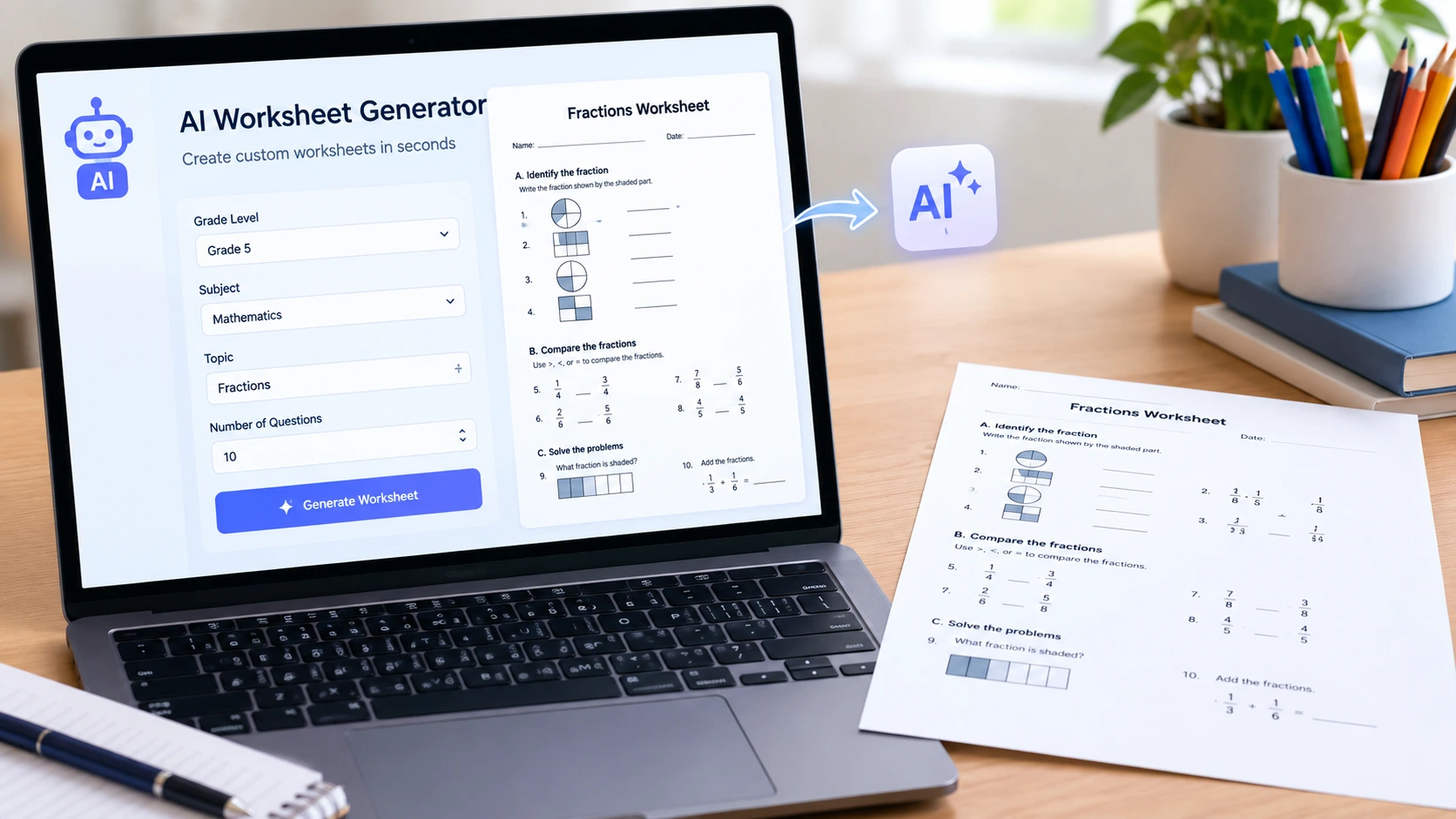
Teachers use generative AI to develop personalized learning plans, to make practice tests and to provide real-time, personalized feedback on student writing.
Software Development
84% of developers have already adopted or intend to adopt AI coding tools and they utilize it on a daily basis for tasks such as code completion, debugging, and documentation.
Customer Support
Support teams use generative AI chatbots to handle routine tickets in real time, passing on complex ones to human agents.
Finance
52% of financial services organizations reported using generative AI, including for report summarisation, fraud pattern explanations, and customer communications.
Manufacturing
Generative AI is used by manufacturers for creation of optimized designs, predictive maintenance documentation and generative design of new variants. Learn more in our breakdown of AI in supply chain.
Entertainment and Media
Generative AI is used by studios and creators for scriptwriting support, visual effects, background music and speeding up the process of creating concept art.
Generative AI vs Traditional AI
Understanding what is generative ai also means knowing what it isn’t — the main difference from traditional AI is that traditional AI analyzes and decides, whereas generative AI creates. Fraud detection, spam filtering and recommendation engines are typical uses of traditional AI. Chatbots, image generators and writing assistants are just some examples of how Generative AI is used. Each has distinct advantages based on the task.
| Factor | Generative AI | Traditional AI |
| Purpose | Creates new content (text, images, audio, code) | Analyzes data to classify, predict, or recommend |
| Output | Original, novel content each time | Fixed labels, scores, or decisions |
| Core Tech | Large language models, diffusion models | Rule-based systems, regression, classification models |
| Example Use | Writing a blog post, generating an image | Detecting fraud, spam filtering, recommendation engines |
| Flexibility | Adapts to open-ended prompts | Optimized for a narrow, defined task |
Popular Generative AI Tools
Now that you know what is generative ai in theory, here are the tools putting it into practice:
- AI Chatbots: ChatGPT, Claude, Gemini.
- Writing Tools: Jasper, Copy.ai, Grammarly.
- Image generation tools: Midjourney, DALL-E, Adobe Firefly.
- AI video generation tools: Runway, Synthesia, Pika.
- Coding assistants: Copilot from GitHub, Cursor, Amazon Q.
The Future of Generative AI
The future of systems seems to be pointing towards something that can produce more than one content when requested. AI models are now available to process text, image and audio all in the same system to produce a video automatically with matching narration and background music.
AI agents are the next big wave, going beyond content creation to autonomous multi-step task execution. By the end of 2026, industry estimates suggest 40% of enterprise applications will incorporate task-specific AI agents — a shift we’re already tracking closely at Daily Techify.
The adoption of Enterprise is not slowing down; the market for Generative AI is estimated to be worth about $67 billion in 2026 and is forecasted to be worth $1.3 trillion by 2032. As the technology moves from a novelty to a critical application, expect to see it getting deeper penetration in each and every industry from the healthcare industry diagnostics to manufacturing design.
Conclusion
Now that you know what is generative ai and how it works, it’s clear the technology is mainstream in the workflow like never before and the organizations embracing it effectively are already ahead of the curve in learning to do it well. From writing the first prompt to assessing offerings for your team, the information contained in this guide will help you get ahead of most new users.
Aidukes simplifies the complex world of AI into guides that can be used by anyone. Continue to learn about generative AI, or explore our full list of AI platforms to compare tools.
FAQs
What is Generative AI in simple terms?
This software is known as generative AI since it has the ability to create new content by analyzing the learned patterns from existing vast amounts of data such as texts, images, or music.
How does generative AI work?
The models of Generative AI are trained on large datasets to identify statistical patterns and then generate new content by predicting the next word, like or sound, based on the user’s query.
What are the main types of generative AI?
They are Text Generation, Image Generation, Video Generation, Audio and Music Generation, Code Generation, 3D Model Generation.
What are some use cases for generative AI?
The list includes everything from text generation tools like ChatGPT and Claude to image generation tools like Midjourney and DALL-E to cod
What are the potential pros and cons of generative AI?
The advantages are quicker content production, more productivity and customization on a large scale. Issues are hallucination, bias, copyright and misinformation.
 Facebook
 Twitter
 Instagram
 Pinterest




Leave a Reply